Custom where it counts
Dieter · October 6, 2023 · principles · custom
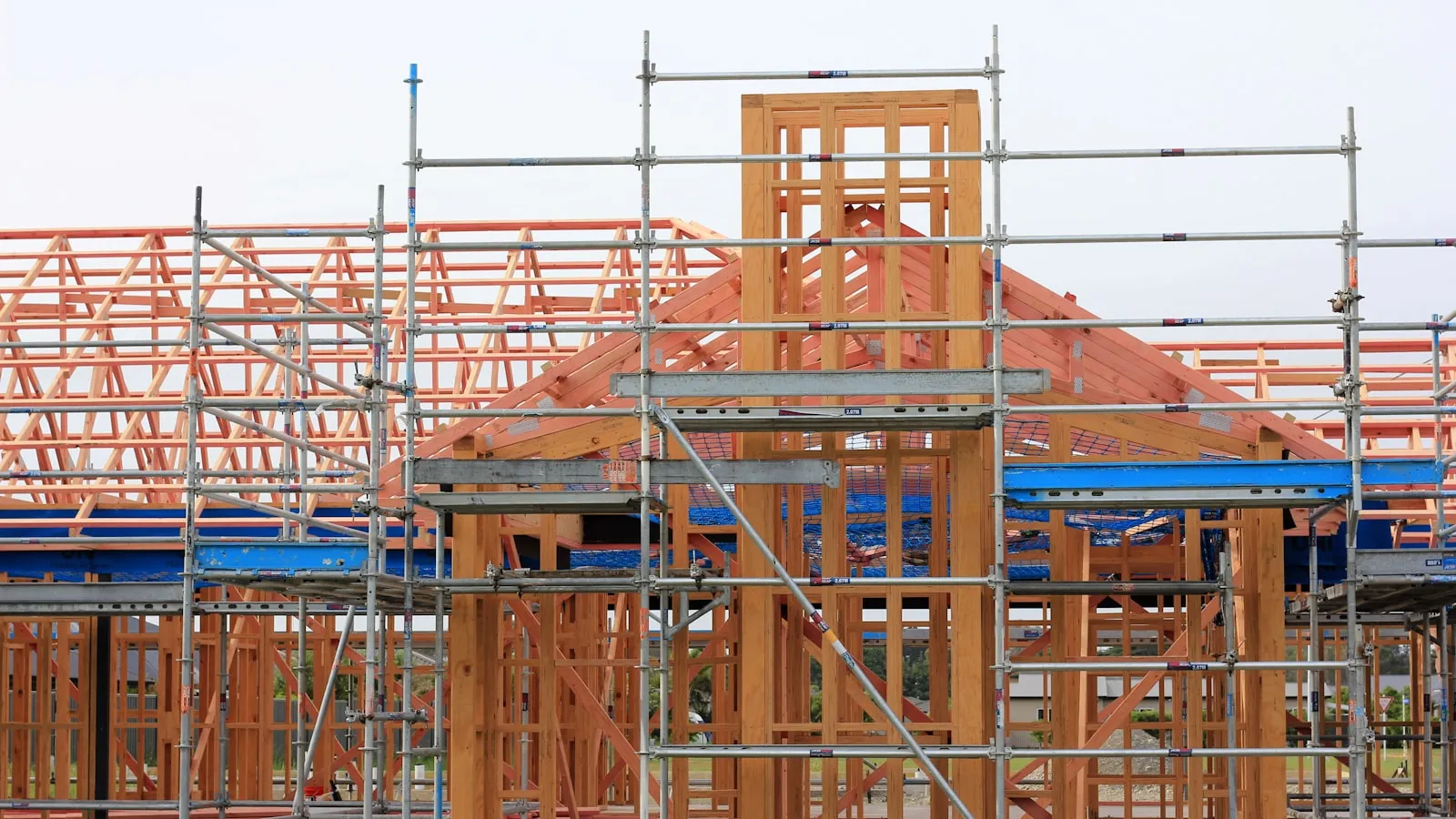
Almost two years ago, we started building a house. Turnkey. On paper the comfortable choice: one party, one quote, and at the end you get the keys. No chasing the contractor, no calling the plumber. Just pick from a catalogue and wait until it’s done.
That’s what I thought at first.
Turnkey is not a blank cheque
What I underestimated: even turnkey means making decisions every single day. Sockets, door handles, tiles, the type of insulation, where a light point sits. Every choice carries a price, a lead time, and a consequence you don’t feel until ten years later.
And you don’t know. You’re standing in a showroom picking between four kinds of flooring without ever having owned a house. The contractor looks at the clock, you look at your partner, and really you just want someone to tell you what the smart thing is.
In the beginning I saw turnkey as: great, I don’t have to figure it all out. Looking back, I’m glad I sat at the table from day 1 — not because I didn’t trust them, but because otherwise I wouldn’t have known what was being built. Whoever only shows up at handover gets the catalogue house. Whoever lives the plan gets their house.
Pain comes with building
Honestly: it was painful. Not the building itself, but the choosing. You commit to decisions before you know whether they were right. Some of them you can’t undo afterwards — and there you are, with a wall standing and an idea that came a week too late.
If I had to do it again — which I really don’t plan to — today I’d see far more value in a house that’s already finished. Someone else made the mistakes, the kitchen is already somewhere, the garden has grown in, you know what you’re getting. Sometimes you simply don’t know what you want, and only afterwards do you realise some things can’t be reversed.
But that’s wisdom you only have after the build. I didn’t have it then. Building is precisely how you learn it. If you don’t do anything, you don’t learn anything. For a house, for software, for anything.
What that means for what clients ask of me

People ask me to build things — a website, a tool, a platform — and the first thing you notice is that they often ask for things they don’t need. Or things they’ll never earn back in customers or revenue. Not out of naivety; just because, like me in that showroom, they’re choosing for the first time.
Experience spots it. I hear it coming from miles away: the feature that sounds great but no one will use, the “we want it like X” that, in their case, doesn’t drive any sales, the extra screen that doubles the project without bringing in a single visitor.
The biggest value isn’t what I build — it’s what I gently talk you out of building.
That’s where the real work sits: someone who keeps both feet on the ground, who listens to what you ask for, and who has the nerve to say “this can be done at half the budget, and it gets you further.” Someone who doesn’t only show up at handover, but who helps you live the plan from the start.
Experience looks expensive — until you do the math
An experienced builder can look like an expensive bird. That holds for the hourly rate; it rarely holds for the final invoice. What you pay for experience comes back in choices that don’t have to be made, in custom work you don’t have to order, in iterations that get skipped because someone has already done it the wrong way and has the scars to show for it.
If I can’t deliver value, I’d rather not start the engagement. It doesn’t make me happy, and in the end it doesn’t make the client happy either. The worst compliment I can imagine sounds like this:
“Oh yeah, we have a website with you. But honestly, I don’t know if anyone actually uses it.”
Nobody walks away cheerful from that. A site that isn’t alive is a wall standing there because someone in the showroom had an idea a week too late.
Custom — but where it counts
Not everything needs to be custom. Most of it shouldn’t be. A large part of what a client needs already exists — open-source, an existing service, a platform that has already proven itself. You build on top of that. Custom work you reserve for the place where it really makes the difference: the bit where your client stands out, or the place where existing solutions stop thinking with you.
Not needing everything custom isn’t a weakness. It’s maturity. And someone who guides you through that honestly, from day 1, is worth more than a catalogue full of options.